History Of Rocket Ball
The inspiring journey of Rocket Ball is a heartfelt testament to Gopalakrishnan's unwavering love and determination. In 2002, Gopalakrishnan crafted this unique sport for his younger brother, Sathishkumar, who was affected by polio. Following a surgery meant to improve his condition, Sathishkumar tragically lost mobility below the waist. Despite the family’s efforts to engage him with indoor games like carrom and chess, Sathishkumar’s unshakable passion for playing with a ball ignited a spark in Gopalakrishnan.
Motivated by his brother's love for the game, Gopalakrishnan created Rocket Ball—an innovative and inclusive sport designed for indoor play with just two players. For a decade, this game brought joy and connection to their home. However, life took a heartbreaking turn in 2012 when Sathishkumar’s health began to decline, and despite relentless efforts to save him, he passed away in 2017.
Since then, Gopalakrishnan has embraced a powerful mission: to honor his brother's memory by sharing Rocket Ball with the world, turning a personal story of resilience and love into a legacy that inspires others.
"Rocket Ball is not just a game — it’s a legacy of love and resilience by Gopala Krishnan"
Images of Rocket Ball Court
Videos of Rocket Ball Court
Rocket Ball Court Rules
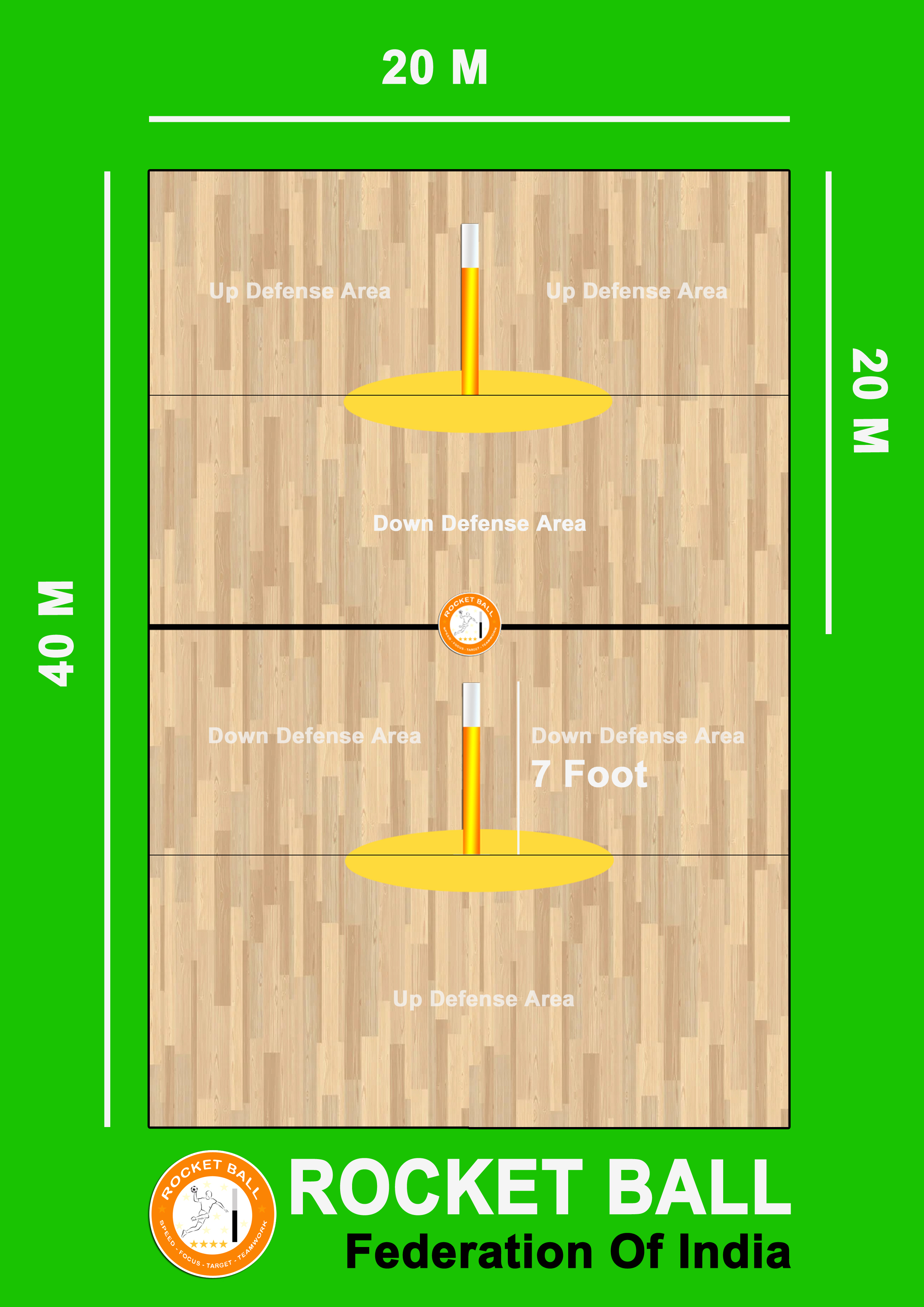
The Rocket Ball playing court is 40 meters long and 20 meters wide. The full diagonal of rocketball court is 44.72 meters. The half diagonal is 28.28 meters. The court's length is divided into two equal sections of 20 meters each:
- The first 20 meters is technical name as F20.
- The second 20 meters is technical name as S20.
Each 20-meter section (F20 and S20) is further divided into two equal zones of 10 meters each:
- The top 10 meters of F20 is called the Up Defence Area (UDA).
- The bottom 10 meters of F20 is called the Down Defence Area (DDA).
The goal post is fixed at the center of the F20 playing area.
The same rules and structure apply to the S20 section:
- The top 10 meters of S20 is called the Up Defence Area (UDA).
- The bottom 10 meters of S20 is called the Down Defence Area (DDA).
- The goal post is also fixed at the center of the S20 playing area.
Images of Rocket Ball Goal Post

Videos of Rocket Ball Goal Pole
Goal Pole
The Rocket Ball Goal Pole stands at a height of 9 feet, In-ground portion: 2 feet (to ensure stability when installed in the ground) and Above-ground portion: 7 feet (must visible during play) . 7 feet is divided into two distinct sections:
- Yellow Un Point Area (YUPA): This section measures 5.5 feet in height.
- White Point Area (WPA): This section measures 1.5 feet in height.
The circumference of the Rocket Ball Goal Post is 24 cm, ensuring a consistent and standardized design for gameplay.
Goal Pole Position
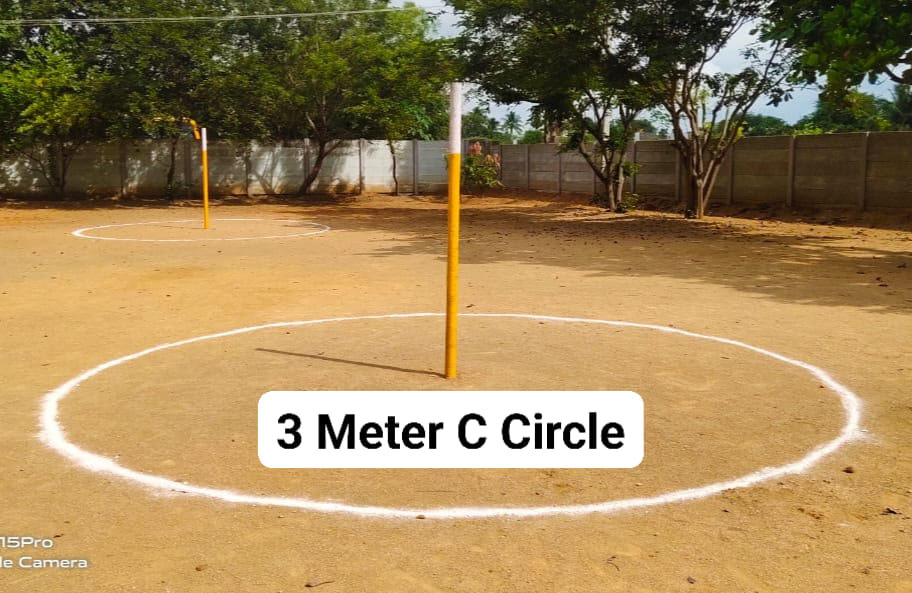
The Goal Pole is positioned at the center of the F20 Meter and S20 Meter sections of the ground. It is fixed precisely at the center of a 3-meter C-circle, ensuring accurate alignment for gameplay.
3 Meter C Circle
Videos of 3 Meter C Circle
3 Meter C Cicle
In Rocket Ball, the 3-Meter C Circle is a crucial element of the game, serving as the restricted area for both teams. Here are the specific rules regarding the C Circle, emphasizing the absence of a goalkeeper :
- 1. Shooting Restrictions ⚡🏐
- 2. Defensive Restrictions 🛡️🚫
1. Shooting Restrictions ⚡🏐
Offensive players are not allowed to shoot the ball while standing inside the C Circle. Players must take their shots from outside the C Circle to attempt a goal.
2. Defensive Restrictions 🛡️🚫
Defensive players are prohibited from entering the C Circle to block or protect the goalpost (while the opponent is attempting a goal). In this situation, the referee will show the Free Throw signal, and the opposing team is awarded a Free Throw.
Rocket Ball Specifications 🏐
TThe Rocket Ball is a round ball, made from rubber material and pvc

Material
- Crafted from high-quality leather or a durable carbon sleeve.
- The surface must non-shiny or non-slippery, since the players need to throw the ball with one hand.
- Ball has the color of orange and black
Dimensions
- Circumference: 43 cm
- Diameter: 13 cm
- Weight: 130–140 grams
Purpose-Built Design
The ball’s texture and weight are calibrated to enhance gameplay, balancing precision and ease of handling. Its ergonomic design makes it ideal for the fast-paced, high-energy action of Rocket Ball.
Toss in Rocket Ball
The match begins with a coin toss. The referee tosses the coin in the presence of both team captains.
- ✔️ The winning team chooses their preferred shooting goal post
- 🔑 Importance of the Toss: If the match ends in a tie, the toss result decides the next level.
- 🤾♂️Match Start:The referee starts the match using the Jump-On Method.
Rocket Ball Team Composition & Rules 🏐
1️⃣ Team Setup
- Each team consists of 10 players:
- 5 Active Players: On the field during play.
- 5 Substuite Players: Substitutes ready to step in.

2️⃣ Match Eligibility
- A team must have:
- Minimum: 8 players to participate in a match.
- Maximum: 10 players for an ideal team setup.
Rocket Ball Player Positions 🎯
In Rocket Ball, each player's position has a specific technical name. These roles are strategically designed to ensure efficient gameplay:
- Top Center Player (TCP): Positioned at the center of the top zone.
- Left Center Player (LCP): Positioned on the left side of the center.
- Right Center Player (RCP): Positioned on the right side of the center.
- Left Down Player (LDP): Positioned in the lower left zone.
- Right Down Player (RDP): Positioned in the lower right zone.
Rocket Ball Substution Rules 🏐
Each Rocket Ball team consists of a total of 10 players, divided into two groups:
- 5 Active Players: Players on the field actively participating in the game.
- 5 Substitute Players: Players available on the bench, ready to replace active players when needed.
Substuite Player
- The substitution change should be done 5 meters away from the center line
- Active player should come outside totally from play field and than substitute player should enter into the play field.
- Outed player can't be replaced with substitutions.
Rocket Ball Match Duration ⏱️
The total duration of a Rocket Ball match is 30 minutes, divided into two sets (15x2) :
- First Set: 15 minutes of gameplay
- Break Time: 5-minute interval for rest and strategy discussions
- Second Set: 15 minutes of gameplay
Tiebreaker: If the match ends in a tie, an additional 5-minute set will be played to determine the winner.
Ensure your team is prepared for this fast-paced and thrilling match structure!
Rocket Ball Timeout Rules
Types of Timeouts
1. Team Timeout
- Each team is allowed two timeouts per match (one per half, plus one extra in the second half if not used earlier).
- Duration of time out is 2 min.
- The coach signals for a timeout by showing a T card on the scorer's table when their team is in possession.
2. Referee Timeout
- The referees can stop the game at any time for medical emergencies, equipment issues, or other exceptional circumstances.
- The duration of such timeouts is at the discretion of the referees.
Card Specification
- T Card Color is Pink Color.
- T Card size is 10 Cm Height and 8 Cm Width.
Rocket Ball Point System 🏅
The Rocket Ball Point System rewards players and teams for their strategic and skillful gameplay. Here are the point categories and their descriptions:
1️⃣ 4 Points (Full Point)
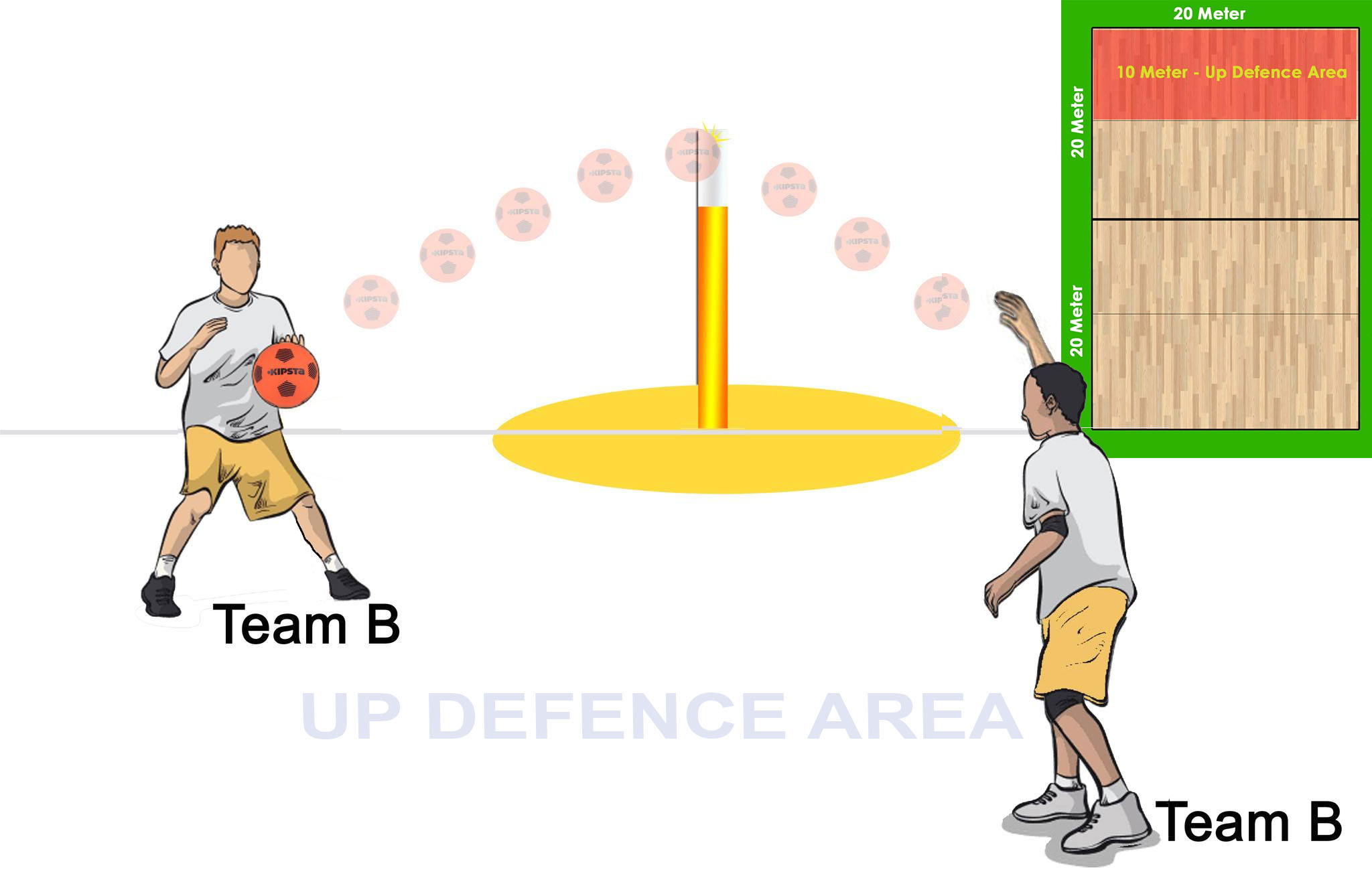
When a player shoots the ball from the Upper Defense Area and it hits the White Point Area of the opponent's goal post, the team earns 4 points if the returning ball is caught by the same team.
2️⃣ 2 Points (Break Point)
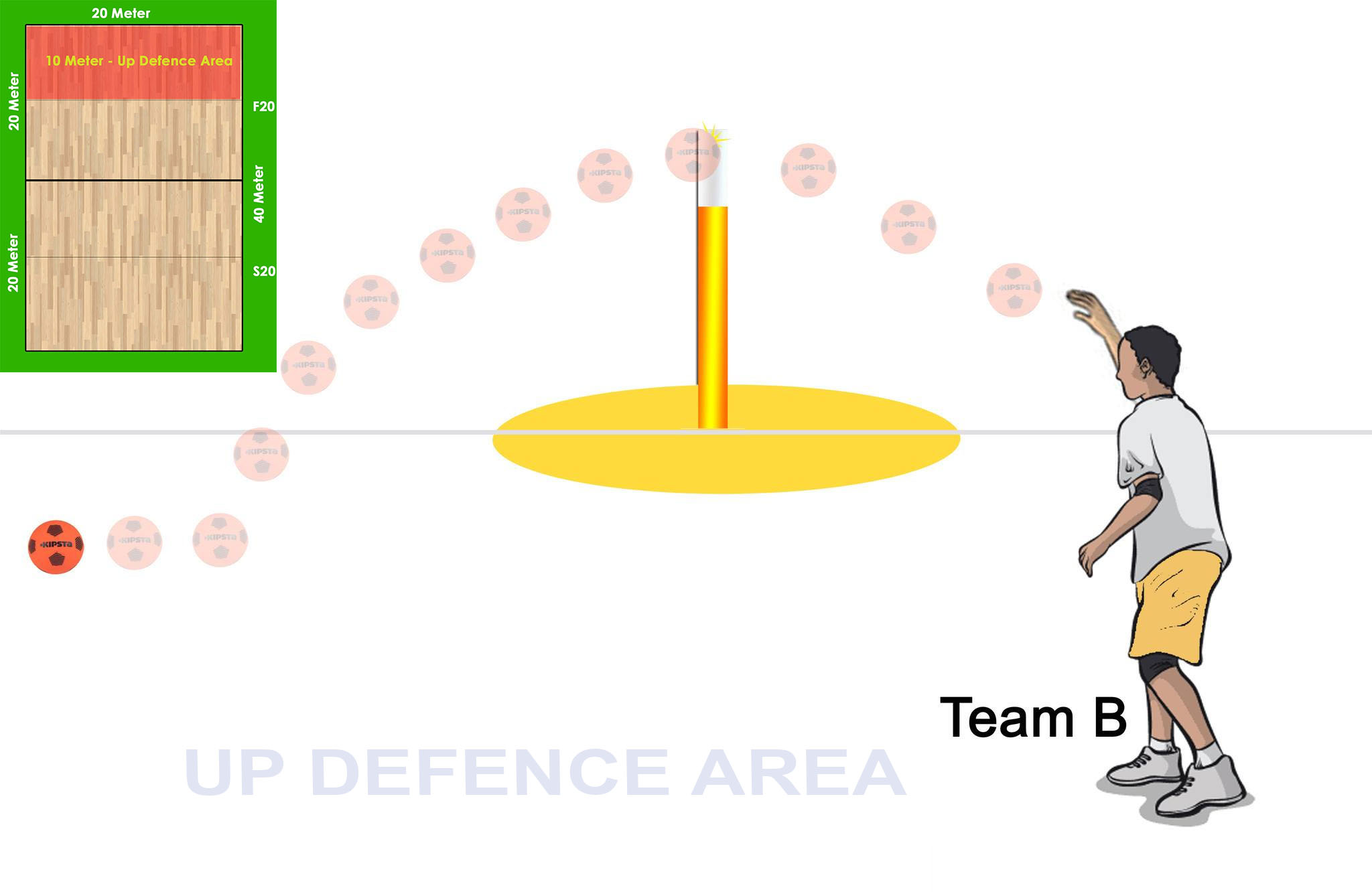
If a player shoots the ball from the Upper Defense Area and it hits the White Point Area of the opponent's goal post, the team earns 2 points if the ball lands anywhere on the ground outside the 3-meter circle.
3️⃣ 2 Points (Full Point)
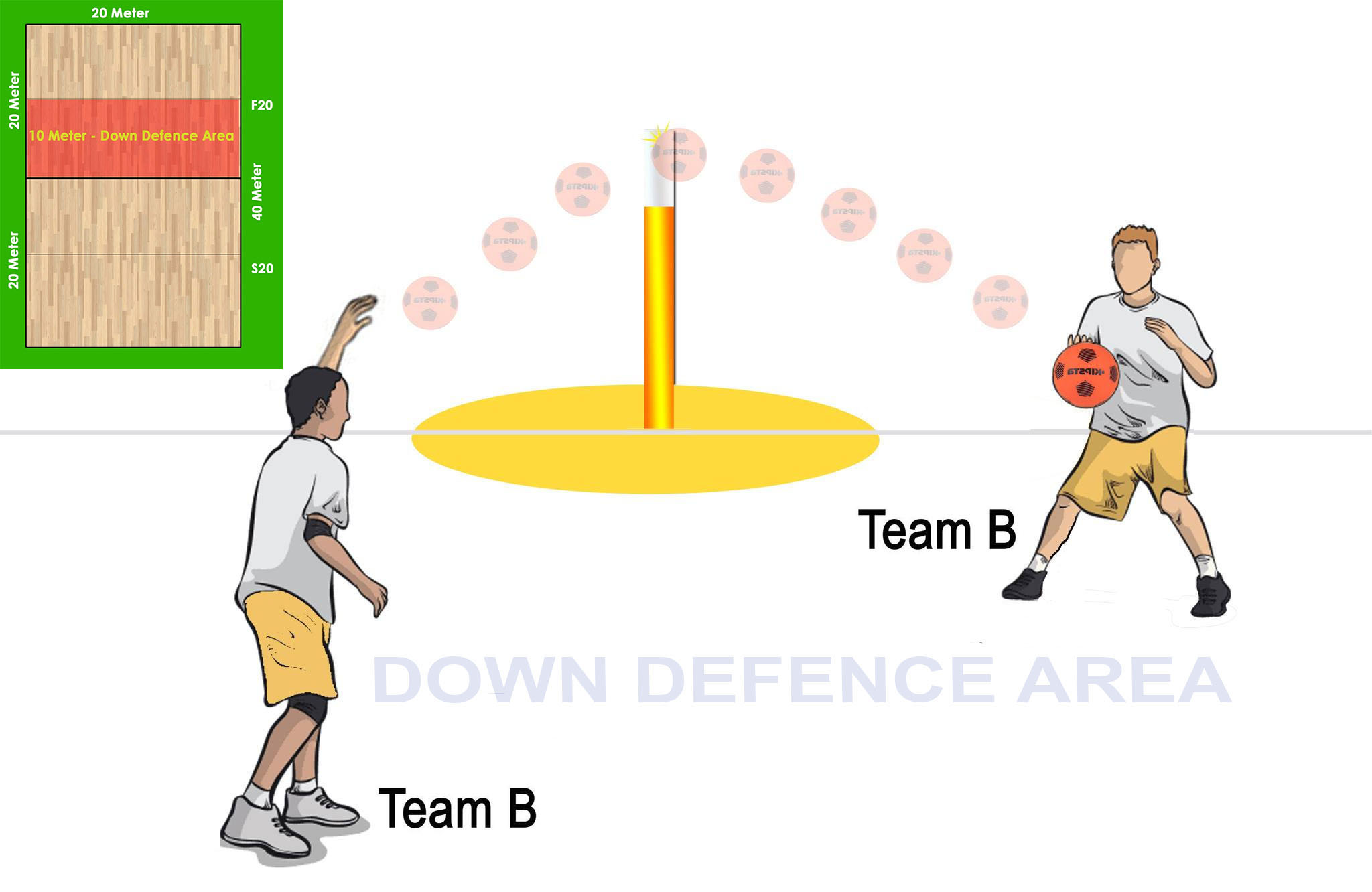
If a player shoots the ball from the Down Defense Area and it hits the White Point Area of the opponent's goal post, the team earns 2 points if the returning ball is caught by the same team.
4️⃣ 1 Point (Break Point)
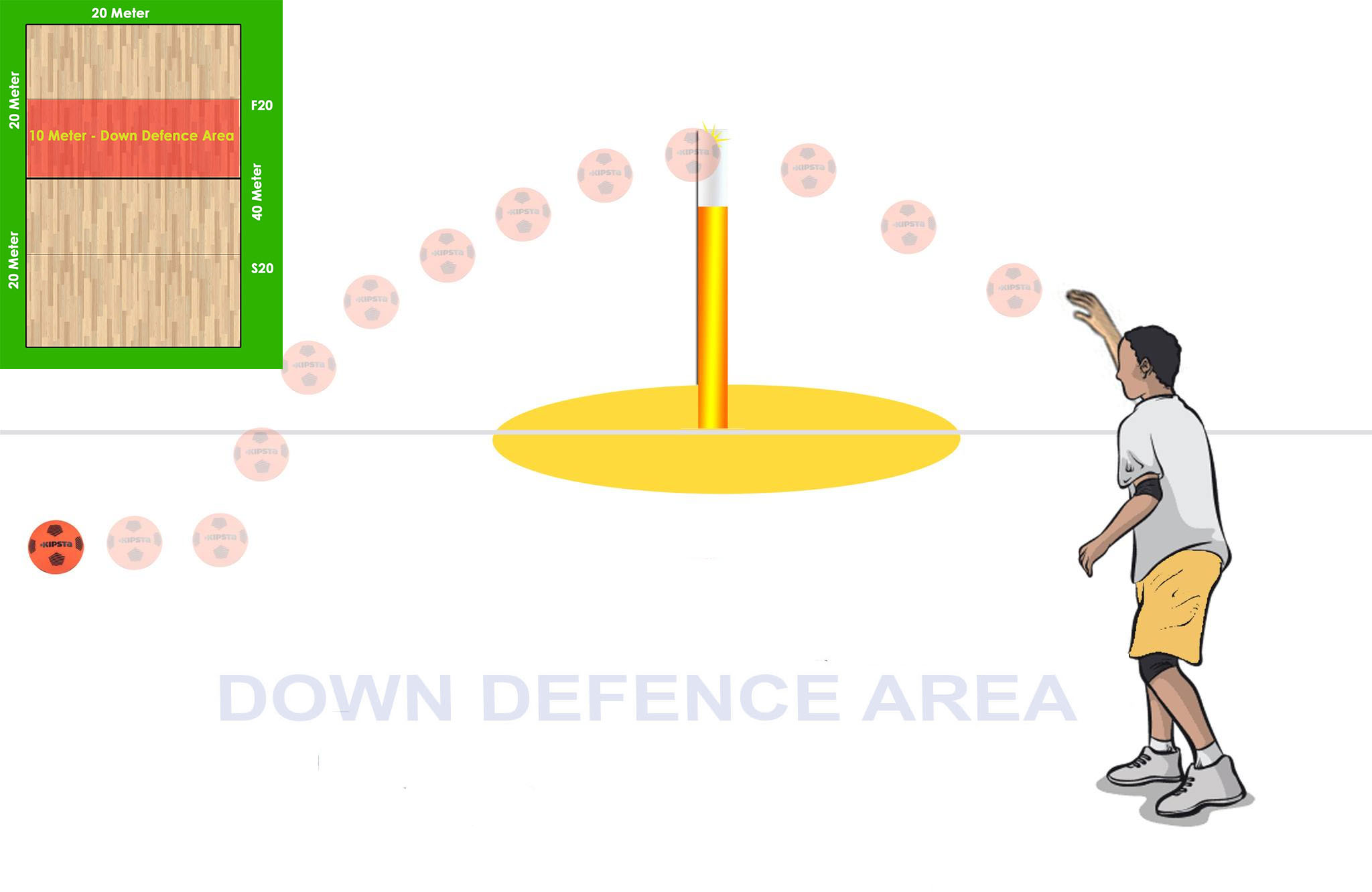
If a player shoots the ball from the Down Defense Area and it hits the White Point Area of the opponent's goal post, the team earns 1 point if the ball lands anywhere on the ground outside the 3-meter circle.
5️⃣ 5 Points (Power Point)
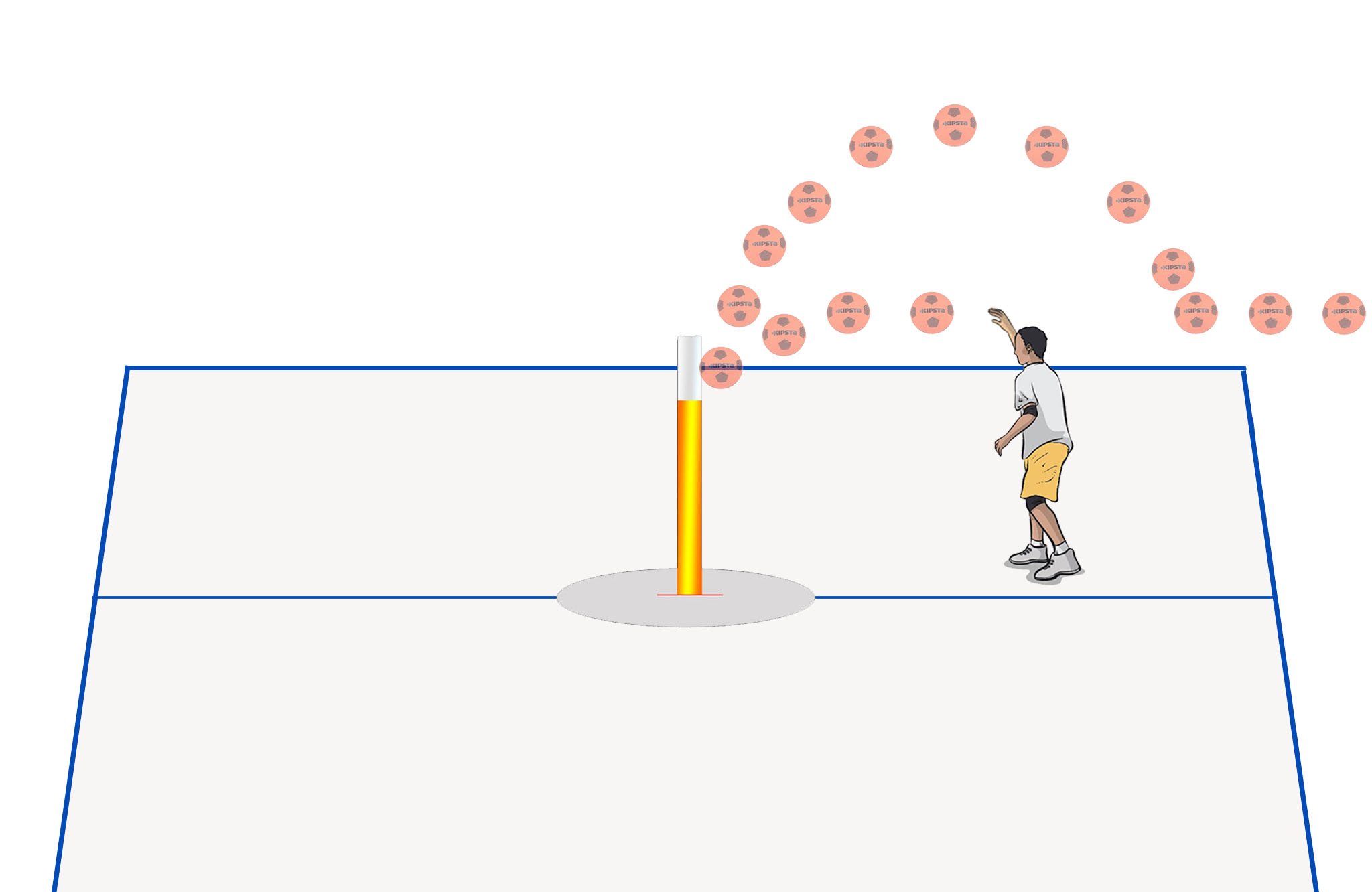
If a player shoots the ball from the Upper Defense Area and it hits the White Point Area of the opponent's goal post, the team earns 5 points if the ball directly exits the playing ground without touching the ground inside.
6️⃣ Credit Point
Credit Point System in Rocket Ball
The Credit Point System in Rocket Ball rewards the opponent team based on the timing of wicket losses during each set. Here’s how it works:
- Within the First 7.5 Minutes: If your team loses all its wickets within the first 7.5 minutes of the set, the opponent team will earn 2 points for each of their remaining wickets.
- After 7.5 Minutes: If your team loses all its wickets after 7.5 minutes have passed in the set, the opponent team will earn 1 point for each of their remaining wickets.
This system adds a strategic element to Rocket Ball, encouraging teams to manage their wickets effectively to minimize their opponent’s points advantage!
This point system adds layers of excitement and strategy to Rocket Ball, making every play count!
Free Throw Rules
- If a player touches the C Circle line or defends the goal from inside the C Circle while the opponent is attempting a goal, the referee will award a free throw to the opposing team.
- In this situation, the referee will show the Free Throw signal, and the opposing team is awarded a free throw.
- The opposing team is allowed to take a free throw immediately after the foul is committed.
- The player taking the free throw must aim for the goal and attempt to score.
- The free throw gives the opposing team the opportunity to score without interference from the defending team, who must stand in the Down Defence Area during the throw.
- If the player is caught out during the free throw attempt, it is considered NOT OUT.
Rocket Ball Passing Skills
Mastering passing skills is crucial in Rocket Ball. Follow these do's and don’ts to improve your game:
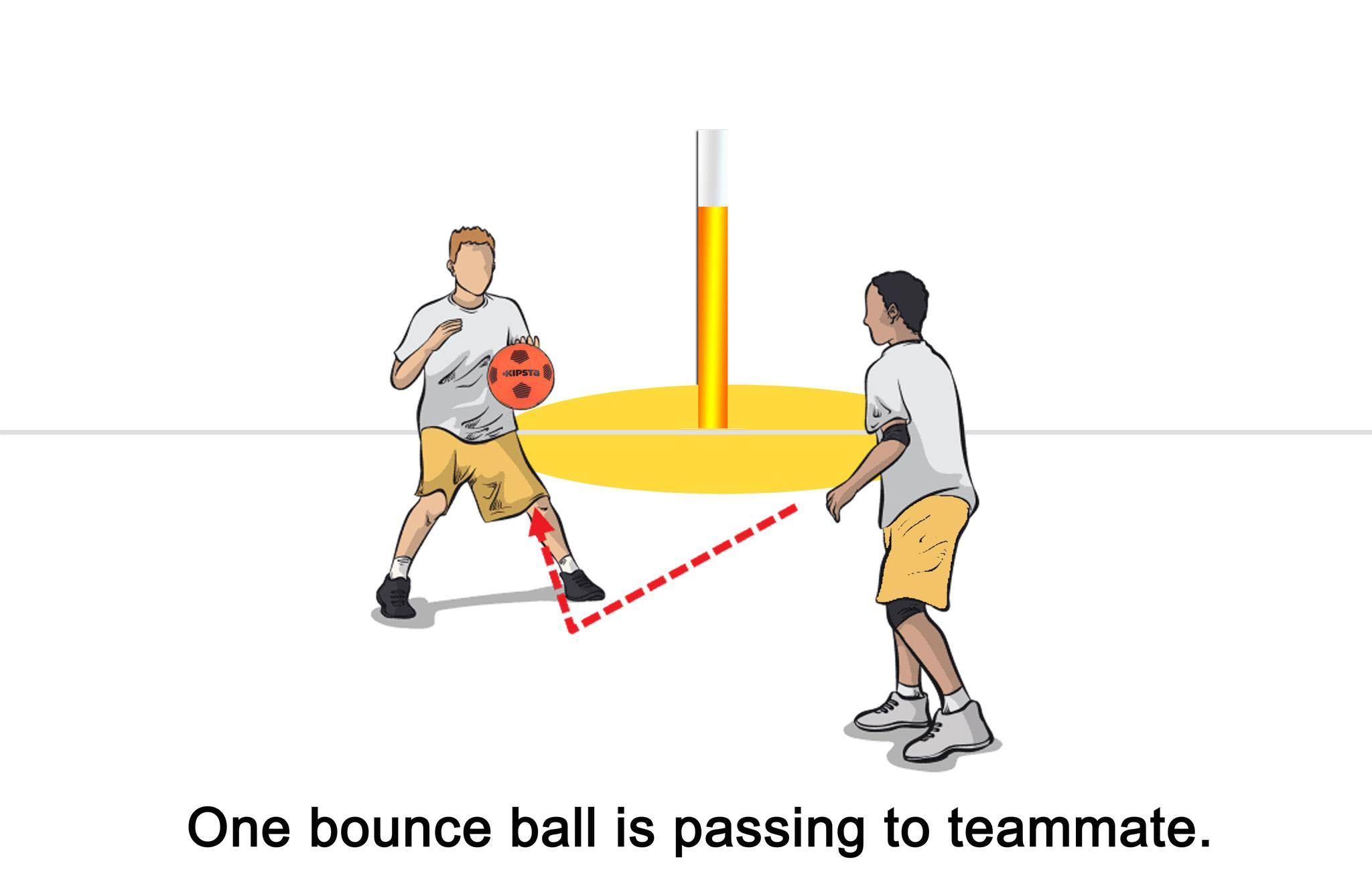
- ✅ Do: Pass the ball to a teammate with only one bounce.
- ❌ Don’t: Allow more than one bounce or throw a full toss, as both are considered fouls.
- ✅ Do: Pass or release the ball within 6 seconds.
- ❌ Don’t: Hold the ball for more than 6 seconds are considered fouls.
📝 Notes:
While holding the ball during a pass, players must stay in their position. The player can bounce and catch the ball for maximum 3 times on the ground.However, they are allowed to change their body direction to pass the ball to a teammate effectively.
𝙍𝙤𝙘𝙠𝙚𝙩 𝘽𝙖𝙡𝙡 𝙊𝙪𝙩 𝙍𝙪𝙡𝙚𝙨
🔴 Out Rule
Rocket Ball has three types of outs
- 1. Catch Out
- 2. Technical Out
1. Catch Out
A player is considered Catch out under the following condition: If your teammate shoots the ball toward the goal post, and the ball hits the post, bounces back to the ground, and an opponent catches it directly without the ball touching the ground, the shooter is declared Catch out.
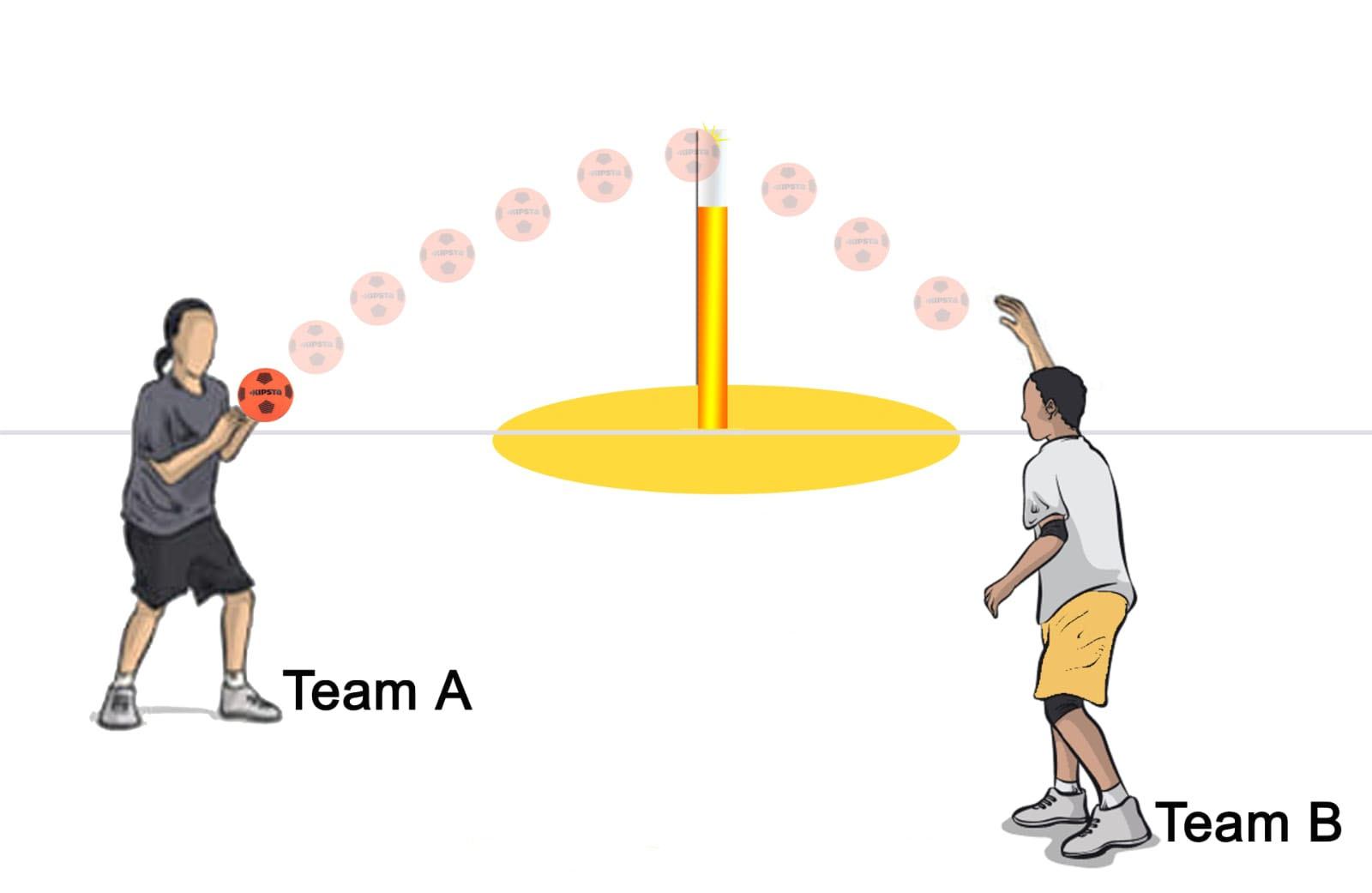
2. Technical Out
A player is considered Technical out under the following condition: In a match, if the referee shows a Blue Card, it means the player is technically out and is not allowed to shoot the ball at the goal pole..
Additional Rules: - If a player is declared Catch out and Technical Out, they do not need to leave the field. Instead, the active player is converted into a backup player. - Backup players are not permitted to shoot the ball toward the goal post but can assist their team by passing the ball.
⚠️ C Circle Area Rules
- 🚫 For Opponent Players: Opponent players are not allowed to catch the ball inside the C Circle area.
- 🏐 For Your Team Players: Your players are not allowed to shoot the ball toward the goal post while standing inside the C Circle area.
Rocket Ball Team Composition & Wicket Rules
Team Composition:
- Each team consists of 10 players.
Wicket Rules:
- A match begins with 5 Active Players on the field.
- If your team loses 4 wickets during the first set or second set, your team will be considered Team out.
- If your team has two Watchable Players in a set, your team is declared Team Out. For more details about Watchable Player
Tie Rules in Rocket Ball
If the match ends with equal points, the following tie-breaker rules will apply:
1️⃣ Four-Shoot Tie-Breaker:
- Each team is given 4 shoots.
- The team with the highest score after these shoots wins the match.
- During this scenario, the opposing team's player must stand in the down defense area.
2️⃣ Two-Shoot Tie-Breaker:
- If the tie persists after the four-shoot tie-breaker, each team is given 2 additional shoots.
- The team with the highest score from these shoots wins the match.
3️⃣ Rocket Shoot:
- If the tie continues after the two-shoot tie-breaker, a Rocket Shoot is conducted.
- Rocket shoot player is not allowed to shoot in 4 shoots and 2 shoots tie.
- Only one shoot is given to one team.
- The team to shoot is decided by the toss winner, based on the opening toss conducted earlier.
📝 Additional Rules:
- The name of the shooter must be declared before the shoot.
- The same player cannot shoot multiple times.
- Players selected for the Rocket Shoot are not allowed to participate in the previous four or two shoots.
This ensures a fair and decisive winner in a tied Rocket Ball match!
Duties of Officials Before Match
- To check the ground surface
- To check the Post.
- To check the ball's air pressure & weight.
- To check the equipment
- To check the table equipment like sports watch score sheets, fix timeout card warning card.
- To Check the climate
- To check the jersey cloth
- To check the place reliability
- To check the medical equipment
- To check the player's ornaments
- To check the nails
- To check the drugs
- To test the ball bounce
- To check the player's t-shirt name
- To check that the two teams are in different colors
Duties of Officials After Match
- To make both the team's players handshake, and to report the score sheets to the referee. And to organize a Referees meeting
Meet Our Game Officials
Our game is overseen by a dedicated team of 7 officials, ensuring fairness and smooth gameplay. The lineup includes 2 Line-In Referees, 2 Line-Out Referees, 1 Scorer, 1 Timekeeper, and 1 Chief Referee to maintain the highest standards of officiating.
- Chief Referee: 1 Official
- Line-In Referees: 2 Officials
- Line-Out Referees: 2 Officials
- Scorer: 1 Official
- Timekeeper: 1 Official
Chief Referee
The Chief Referee is the main authority among all referees. They are responsible for making the final decisions in all situations. A Chief Referee is mandatory for all official state and national matches to ensure fair play and adherence to the rules.
Line-In Referee
- To call both the team captains give a handshake. And greet them with the words that "all the best" referee should hide the coin beside them and exchange a coin and show both hands to the captain by closing the captain should choose a hand. The winner in a team captain can call the toss.
- The captain should choose after the toss. The winning team captain should choose a goalpost. This toss is also used for the tie breakers situation.
- To watch the fouls during the playtime.
- It includes double-bounce fouls,contact fouls,throwing on a 3-meter circle, bouning the ball more than 3 meter distance, 6 seconds foul, 4 consecutive passes, ball out foul,shooting points ,warning cards, to start the play and restart the play, footfault, Move, charging the player, violation, breaking of rules.
Line-Out Referee
- To check the foot of the players while shooting.
- To check the players, whether they are running inside the circle following the players playing near the circle.
Duties of Timers
- The timer has full responsibility for the time of play when to stop and when to start .
- The timer has to start at the time when the match starts. After the hearing officials sound off official if the ball goes out of the court, then the timer should stop the time after the game restarts, then the time should start the time.
- The timer has the responsibility of time control by giving the time out during the play
Duties of the scores
- To note the score to get the signature from the official's captains and check the substitution.
Warining Cards



Time Out Card

Law of warning cards
In Rocket Ball, four types of cards are used: the Yellow Card, Blue Card, Orange Card, and T Card.
1. Yellow Card
It is considered as a warning. It is given when Valgur speech on the ground ,charging the opponent players, interpreting the officials and wrong substitution.
2. Blue Card
It is this second warning for players. If it happens again and again, the blue card is given if the blue card is given the players it get technically out.
3. Orange Card
If the referee shows an Orange Card, the player is declared a Watchable Player. For More details about Watchable Player
Law of Time Out Card
The coach signals for a timeout by showing a T card on the scorer's table when their team is in possession.
Card Specification
- T Card Color is Pink Color.
- T Card size is 10 Cm Height and 8 Cm Width.
- Yellow Card, Blue Card and Orange Card size is 8 Cm Height and 5 Cm Width.
Watchable Player
- If the referee shows an Orange Card, the player is declared a Watchable Player. For More details about Orange Card
- The Watchable Player is not allowed to play during both the first half and the second half of the match.
- If this occurs in the first or second half, the team's captain or manager cannot replace the Watchable Player with a substitute.
- The affected team must continue playing with only four players in that set.
Law of Fouls
Rocket Ball has more then 7 types of fouls
- A) Side Line Foul
- B) Ball Hold Foul
- C) 3 Meter Foul
- D) Bounce Foul
- E) C Circle Foul
- F) Same Pass Foul
- G) Illegal Touch Foul
- H) Technical Foul
A) Side Line Foul
In the match, if ball crossed side line, the team that touched it last loses possession. Play has been stopped by the referee and ball is hand over to the opponent team. The player taking the pass-in must keep one foot on the side line while throwing the ball.
B) Ball Hold Foul
Players must pass or release the ball within 6 seconds of gaining possession. Holding the ball for more than 6 seconds is considered a foul.
- The referee will issue a yellow card to the offending player.
- Possession of the ball will be handed over to the opposing team.
C) 3 Meter Foul
When a player has possession of the ball, it is mandatory for both their teammates and opponents to maintain a distance of at least 3 meters from the player holding the ball. This rule is applicable to both teammates and opponents to avoid crowding or unfair blocking
1. Same Team Violation:
- If players from the same team violate the 3-meter rule, the referee will issue a warning.
- If the violation occurs repeatedly, the referee will hand over the ball to the opponent team.
2. Opponent Team Violation:
- If an opponent team player blocks the ball within the 3-meter gap, the referee will issue a warning.
- If the violation happens repeatedly, the referee will issue a yellow card to the offending player.
D) Bounce Foul
Players are allowed to pass the ball to a teammate with only one bounce. Passing with more than one bounce or throwing a full toss is considered a foul.
- The referee will stop the play and opposing team will be awarded possession of the ball.
E) C Circle Foul Rules
- The C Circle is a restricted area with a radius of 3 meters. For More details about 3 Meter C Circle
- Players are not allowed to:
- Step on the C Circle line.
- Enter the C Circle during play.
- Players must avoid touching the C Circle line with their foot.
- Touches the C Circle line, or Defends the goal from inside the C Circle while the opponent is attempting a shot, the referee will award a free hit to the opposing team.
F) Same Pass Foul
- During the match, if the ball is passed between two players more than three times consecutively, it is considered a Same Pass Foul.
- The referee will stop the play immediately.
- Possession of the ball will be handed over to the opponent team.
G) Illegal Touch Foul Rules
- Rocket Ball strictly prohibits actions such as tripping, pushing, hitting, clinching, charging, or holding. These are classified as illegal Touch Fouls.
- For a first offense, the referee will show a Yellow card as a warning.
- If the same player repeats the offense, the referee may issue an Blue card, indicating a Technical Out.
- Players are expected to maintain fair play to keep the game safe and enjoyable for everyone.
H) Technical Foul Rules
- A Technical Foul is given when a player engages in actions such as arguing with the referee or taunting an opponent. This foul does not involve physical contact with the opponent while the ball is in play.
- If a Technical Foul occurs, the referee may show a Blue card to indicate the player is "Technical Out."
- If the player commits more violations, the referee may issue an Orange card, marking the player as "Watchable Player."
- Players must respect the referee and opponents to maintain the integrity and fairness of the game.